Royal Oaks Country Club Is Rebuilding Its Golf Course for the First Time in 25 Years
If you have played the 16th hole at Royal Oaks, you know the moment. The tee shot carries over water to a green that sits behind a rock-lined waterfall, the kind of hole photographed on postcards and printed on tournament flyers. It has been the signature image of this course since it opened in 2000, when Fred Couples put his name on a parkland layout built with architects Brian Curley and Lee Schmidt on the site of the old Andrau Airpark, eight miles west of the Galleria.
That hole, and every other one on the course, is about to be rebuilt. Not resurfaced. Not touched up around the edges. Rebuilt, by a different architect, for the first time since Royal Oaks opened its gates twenty-five years ago.
Residents who have lived at Royal Oaks for a while have already seen one major renovation cycle. In 2007, the membership approved a master plan that expanded the clubhouse, remodeled the casual dining and bar lounge spaces, updated the aging pool facilities and locker rooms, and added a two-story, 10,000-square-foot fitness wing. It was a real project. It changed how members ate, worked out, and gathered. But it never touched the golf course itself.
This fall's project is a different animal. Royal Oaks describes it as the most significant transformation in the club's history, and the distinction matters: the 2007 work reshaped the building people walk through before and after their round. What's happening now reshapes the ground they play on. For a club whose entire identity is built around a Fred Couples signature course, that is not a small update. It is the first time the actual golf course has been rebuilt rather than maintained.
| Project | Year | Scope |
|---|---|---|
| Clubhouse master plan | 2007 | Dining, bar lounge, pools, locker rooms, new fitness wing |
| Golf course rebuild | 2026 | Full course redesign, first since the 2000 opening |
Here is the detail that turns this from a marketing headline into a real story about the life cycle of a golf course. Golf Digest's Best in State rankings for Texas placed Royal Oaks 23rd in the 2017-18 cycle. By 2019-22 it had slipped to 30th. In the most recent 2023-24 rankings, it sat at 36th.
That is not a single bad review or a down year. It is a steady, multi-cycle drift, the kind that shows up when a course built on 2000-era agronomy, drainage, and bunker construction reaches the point where cosmetic maintenance stops being enough. Greens firm up unevenly, bunker edges wash out in Houston's rain, and the strategic intent an architect built in twenty-five years ago starts to blur under two decades of regrassing and patching. The ranking slide is the quiet, measurable reason a full rebuild became necessary rather than optional. Members who assumed a well-maintained course ages gracefully forever now have the number that says otherwise.
The architect Royal Oaks hired to replace Couples' design is Beau Welling, and the choice tells you something about how the club is thinking about its next twenty-five years.
Welling's path to golf design ran through Tom Fazio's firm, where he worked for a decade starting in 1997 before launching his own practice, Beau Welling Design, in 2007. His first client that year was Tiger Woods, and Welling has since served as the lead architect for Woods' TGR Design studio for more than a decade, a working relationship documented in LINKS Magazine's profile of Welling. Their joint credits include Bluejack National, a private club built just outside Houston, and Payne's Valley at Big Cedar Lodge in Missouri. Royal Oaks' own materials describe Welling as a Tom Fazio protégé and a trusted Tiger Woods collaborator, and given that he already has a completed project in the Houston market, that framing is not just brand copy. It is a credential the club can point to locally.
Royal Oaks is not the first Houston club to face this moment, and the precedent sits across town in a very literal sense. A decade ago, River Oaks Country Club rebuilt its own 18-hole course under architects Tom and Logan Fazio, with grassing work beginning in January 2015, as reported by Golf Course Architecture. Tom Fazio is the same designer whose firm trained Beau Welling for a decade before Welling went out on his own.
That is the pattern worth noticing. Houston's older private clubs, once they pass the twenty to twenty-five year mark, tend to face one full course rebuild, and when they do, they keep the work inside the same design lineage that shaped the city's private golf scene in the first place. Royal Oaks hiring a Fazio-trained architect is not a departure from how Houston clubs have handled this transition. It is consistent with it.
For anyone living inside the gates, the practical question is what changes and what doesn't while construction is underway. Based on what the club has published, the racquet and aquatics side of the property is expected to keep running normally. Royal Oaks currently operates six hard tennis courts, two clay courts, and four dedicated pickleball courts, all lit for night play, along with an Aquatics Center that includes lap, recreational, and kiddie pools plus a Splash Zone. None of that infrastructure is part of the golf course project, and the club's own materials continue to promote the racquet and fitness programming as ongoing during this stretch.
The golf course itself is where the disruption lives. Members should expect the layout to be unplayable in stretches as the rebuild moves through the property, the standard tradeoff for any full course renovation rather than a hole-by-hole patch job.
There is also a cost signal worth understanding now rather than after the fact. As of August 2026, the equity golf initiation fee at Royal Oaks sat around $60,000, already stepping up toward $75,000, with the club signaling publicly that pricing will move past $100,000 once the new course opens. That kind of tiered pricing ahead of a renovation is common in the private club world. It rewards people who join or lock in membership before the finished product raises the price of admission, and it is one more reason the club's marketing has leaned so heavily into the Welling and Tiger Woods connection this year.
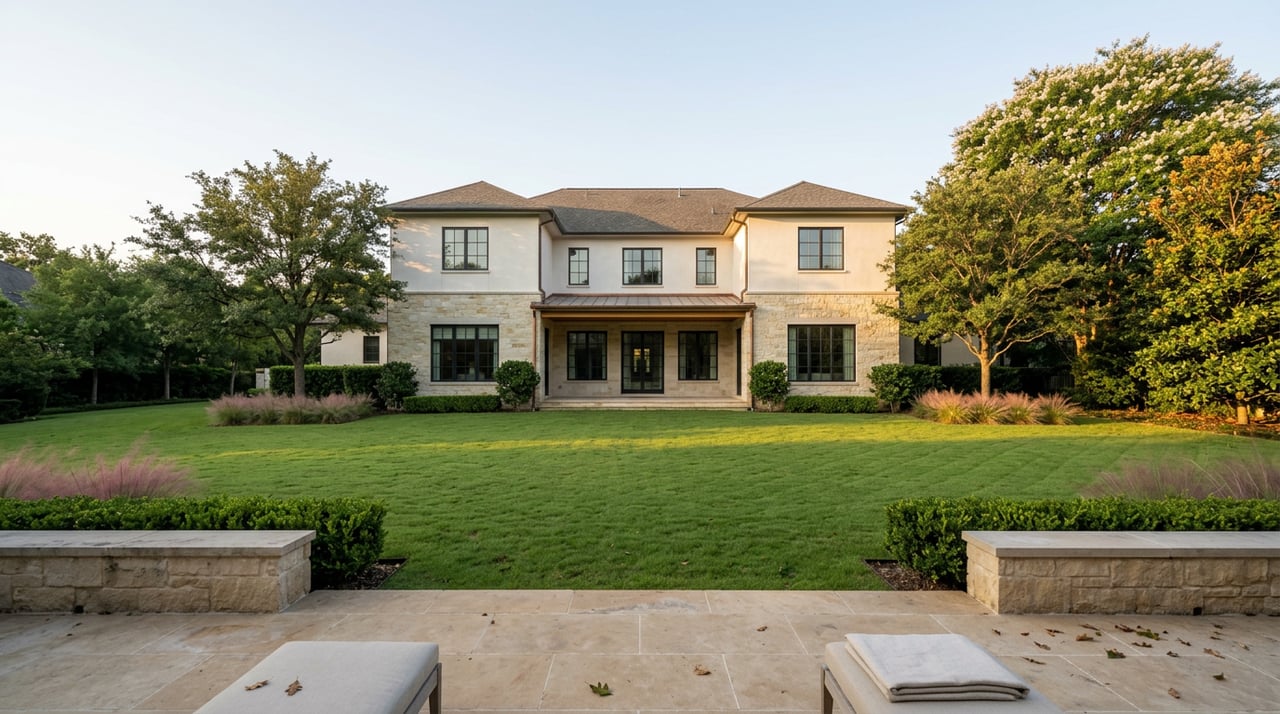
Homes at Royal Oaks Country Club have always been sold in part on their relationship to this specific golf course, the water features, the tree lines, the sightlines from a back patio to a fairway. A full re-architecture of that course is a structural change to what that relationship actually looks like once the work is finished, not a cosmetic refresh residents can shrug off as routine upkeep. Whether Welling's redesign preserves the water-heavy character that has defined the property since 2000 or reshapes it more dramatically will matter to anyone who bought a lot specifically for its view of a particular hole.
For now, the clearest fact is the one embedded in the ranking numbers: a course that was once ranked 23rd in the state had drifted to 36th before this project was announced. Whatever comes out of this fall's rebuild, it is being built to answer that specific decline, not just to freshen up a quarter-century-old layout for its own sake.
If you're weighing what a renovation like this means for property values or timing inside Royal Oaks Country Club, Uptown Real Estate Group can walk you through it. Book a private real estate consultation.
Uptown Real Estate Group wants to give you the best experience choosing your new home. We are real estate agents ready to support your questions and give you the lowest prices according to your needs, feel free to ask whatever you want. It's a pleasure to serve you!