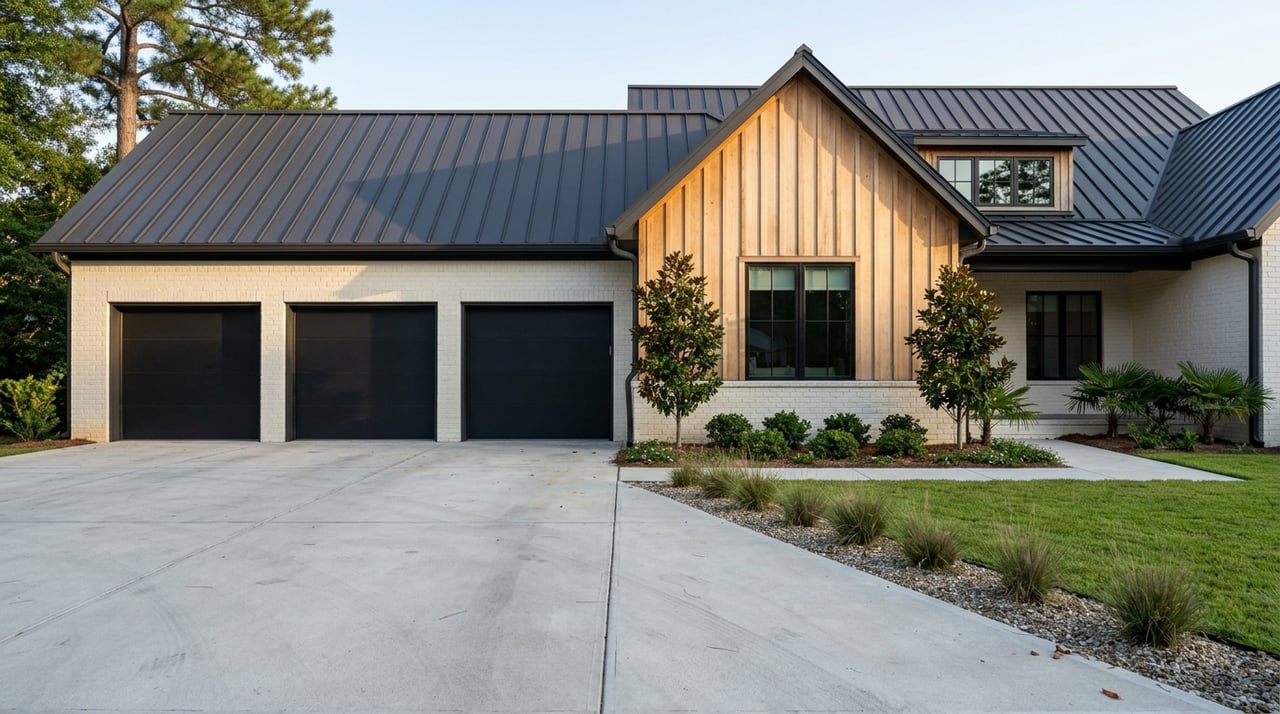
Magnolia TX Real Estate Investment: Why Buyers Are Watching
If you are looking beyond Houston’s core for your next real estate move, Magnolia deserves a closer look. For many buyers and investors, the appeal is not hype or a quick trend. It is steady population growth, improving access, and a housing mix that fits how many people in Greater Houston actually want to live. This guide breaks down why Magnolia is getting more attention, what the numbers suggest, and what you should verify before you buy. Let’s dive in.
Magnolia is still small by Houston-area standards, but its recent growth is notable. The Census Bureau estimates Magnolia at 8,095 residents in 2025, up from 6,506 in 2024 and 2,359 in 2020. That kind of jump helps explain why more buyers and investors are paying attention.
The broader county adds important context. Montgomery County is estimated at 781,194 residents in 2025, and the county has grown 25.9% since 2020. The Texas Demographic Center also ranked Montgomery County 5th in Texas for percent growth and 9th for numeric growth from 2023 to 2024.
For you as a buyer or investor, growth matters because it often supports long-term housing demand. It does not guarantee appreciation or rental performance, but it does show that Magnolia sits in a part of the Houston region that is attracting more residents.
Location is a big part of Magnolia’s appeal. The city says Magnolia sits at the junction of FM 1774 and FM 1488, about 45 miles northwest of Houston and 25 miles southwest of Conroe. That places it in a practical position for people who want more space while staying connected to major job centers.
Transportation improvements support that story. TxDOT says SH 249 Section 1A, from FM 1774 in Pinehurst to FM 1488 near Magnolia, is open to traffic. Combined with the area’s road network, Magnolia reads more like an exurban commuter market than a purely rural one.
That distinction matters if you are evaluating demand. A market tied to commuter access can attract owner-occupants, long-term renters, and relocation buyers who want room to grow without giving up regional connectivity.
Magnolia’s housing profile lines up with what many Greater Houston households seek. Montgomery County’s consolidated plan says the housing stock is primarily single-family at 72%, and owner-occupied at 75.9%. It also notes a median year built of 2001, which points to a more modern housing base than many older urban markets.
The same county report says vacancy declined from 10.1% in 2010 to 8.2% in 2021. That suggests continued absorption rather than excess inventory. In plain terms, homes in this county have been getting used, not sitting empty.
Magnolia city’s own profile adds more detail. QuickFacts reports an owner-occupied housing rate of 64.1%, a median owner-occupied home value of $322,800, and median gross rent of $1,121. For Montgomery County, those figures are 71.8%, $346,200, and $1,532.
This tells you two useful things. First, Magnolia is part of a market that still leans heavily toward ownership. Second, there is also a meaningful rental base, which can matter if you are considering a long-hold strategy.
A healthy market is not always the one moving fastest. Sometimes what you want is a market with activity, reasonable pricing behavior, and enough demand to support resale or leasing without extreme volatility.
HAR’s Magnolia market trends for March 2026 reported a median price of $324,995, an average price of $419,626, 210 transactions, and 41 days on market. That profile suggests movement and buyer interest, but not the kind of frenzied pace that can make underwriting difficult.
For investors and second-home buyers, that can be appealing. You may have a little more room to evaluate options carefully, compare neighborhoods and builders, and focus on long-term fit instead of reacting to a bidding frenzy.
Magnolia’s development pipeline is another reason the area is emerging. The city has a structured development process through its Unified Development Code, and it requires pre-development meetings for residential and commercial projects. It also adopted the 2021 I-Codes and 2023 NEC on August 13, 2024.
That kind of framework matters because it shows that development inside city limits follows a defined process. The city’s development materials also list Magnolia Town Center as a project in the works, which adds to the story of ongoing expansion.
Nearby master-planned communities strengthen the bigger picture. Kresston is described as a 1,400-acre master-planned community planned for about 3,500 homes, with direct access to the 249 Aggie Expressway extension to 105. Magnolia Springs is a 665-acre master-planned community with access to the Aggie Expressway and I-45.
Large, phased communities can support a market over time by adding inventory, amenities, and buyer awareness. For you, that may translate into more choices today and broader resale interest later, especially if you are targeting newer detached homes.
Magnolia’s investment case is different from a dense urban play. Based on the county’s housing mix, suburban access profile, and active development pipeline, the area appears better suited to detached-home strategies than condo-centric investing.
That can include several use cases:
This does not mean every property will perform the same way. It means Magnolia’s underlying profile supports a more suburban Texas investment thesis built on population growth, road access, and single-family demand.
One of the biggest due diligence points in Magnolia is something many buyers miss at first: a Magnolia mailing address does not automatically mean the property is inside the city limits. According to the city’s FAQ, Magnolia’s city limits cover about 5 square miles, with ETJ extending a half-mile beyond that boundary.
Why does this matter? Because rules, permitting, and review processes can differ depending on whether a property is inside city limits, in the ETJ, or elsewhere in unincorporated Montgomery County.
The county-level environment adds another layer. Montgomery County says it has no land-use controls, or zoning, and no countywide building code. Inside city limits, Magnolia does have its own code and permit process.
Before you make assumptions about use, improvements, or future plans, confirm the property’s exact jurisdiction. That one step can save you time, money, and avoidable surprises.
If you are considering a short-term rental or part-time second-home strategy, regulations are especially important. Magnolia has an ordinance requiring permits for short-term rentals. The city also states that stays under 30 consecutive days are subject to hotel occupancy taxes.
The city lists a 6% state tax and a 7% city tax, for a total of 13%. If you are modeling income, those costs need to be part of your math from the beginning.
This is a good reminder that not every appealing property is a fit for every strategy. Before you buy for STR use, verify city-limit status, permit requirements, and any tax obligations tied to short stays.
If Magnolia is on your shortlist, focus on practical due diligence first. In a fast-growing corridor, details around location, infrastructure, and intended use can matter just as much as price.
Start with this checklist:
For many buyers, Magnolia works best as a long-view decision. The story here is less about chasing a flashy short-term spike and more about positioning yourself in a growing corridor with expanding access and a suburban housing base.
So why is Magnolia emerging for Greater Houston investors now? Because several factors are lining up at once. Population growth is strong, commuter access has improved, the market remains active, and the area continues to add large-scale residential development.
Just as important, Magnolia offers a different type of opportunity than central Houston. It gives you access to a growth corridor where detached homes, newer construction, and longer-hold strategies may make more sense than a dense urban approach.
If you want to buy with a clear plan and strong due diligence, Magnolia can be worth serious attention. For tailored guidance on Houston-area investments, relocation goals, or suburban growth markets, book a private consultation with Mariana Saldaña.


Uptown Real Estate Group wants to give you the best experience choosing your new home. We are real estate agents ready to support your questions and give you the lowest prices according to your needs, feel free to ask whatever you want. It's a pleasure to serve you!