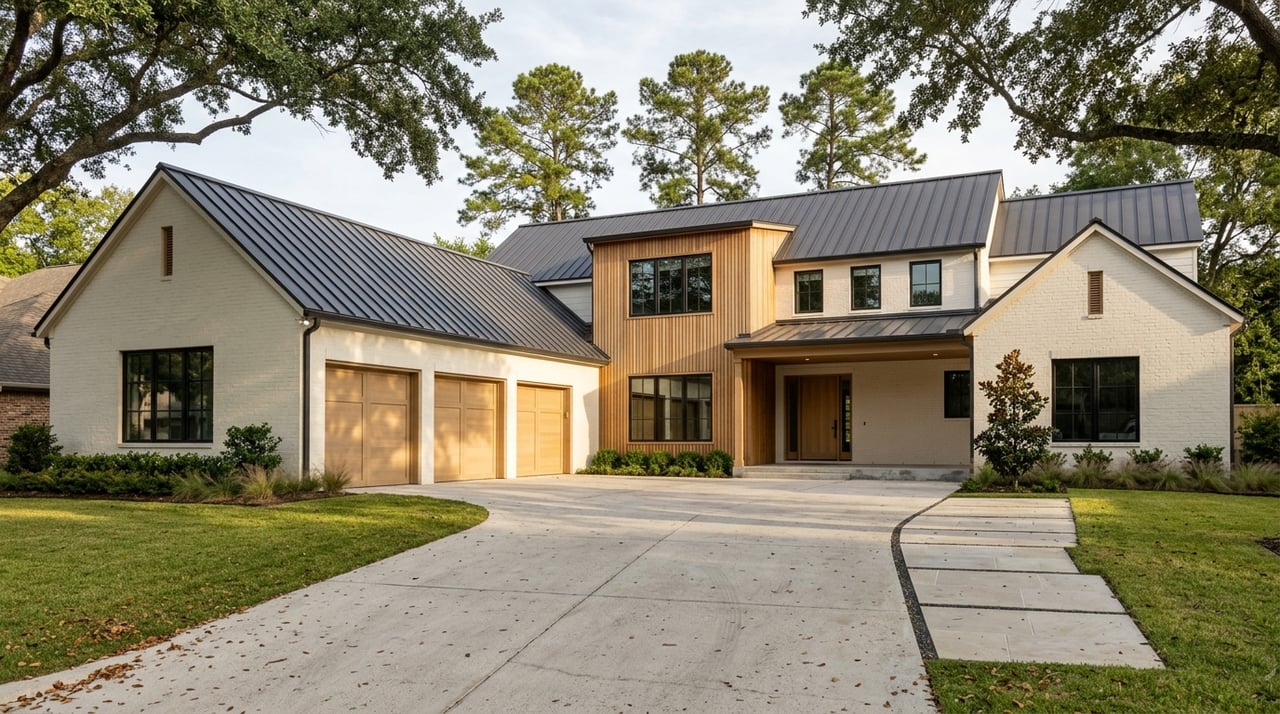
Magnolia TX Real Estate Investing vs The Woodlands
Choosing between Magnolia and The Woodlands as an investment target is not just about price. It is about matching your strategy to the kind of market you want to own in. If you are weighing lower entry costs against stronger premium demand, this comparison will help you sort through the tradeoffs and invest with more clarity. Let’s dive in.
For property investors, Magnolia and The Woodlands serve very different roles in Montgomery County. Magnolia offers a lower price point, more land flexibility, and a growth story tied to expansion corridors. The Woodlands offers a higher-priced, more established market with stronger household incomes, deeper amenities, and a more standardized product.
Current Census and market data make that gap clear. Magnolia has an estimated population of 8,095, a median household income of $78,605, and a median owner-occupied home value of $322,800. The Woodlands has a population of 114,436, a median household income of $140,701, and a median owner-occupied home value of $511,700.
In simple terms, Magnolia is the value-and-growth option. The Woodlands is the premium-and-liquidity benchmark. Your best choice depends on whether you care more about lower basis and land optionality, or about stronger pricing power and a more polished long-term hold environment.
If your first question is how far your capital will go, Magnolia has the advantage. As of April 2026, Magnolia’s median listing price was $372,900 and its median sold price was $326,895. That creates a much lower entry point than The Woodlands.
The Woodlands, as of May 2026, posted a median listing price of $619,900 and a median sold price of $599,850. That price spread reflects the premium investors pay for a master-planned setting, stronger income levels, and a more established identity.
For many investors, this decision starts with budget but should not end there. Lower acquisition cost can create flexibility in Magnolia, but the higher price point in The Woodlands may buy you stronger demand fundamentals and faster resale visibility.
Rental income matters, but so does how it relates to your purchase basis. Magnolia’s median rent was $2,000 per month, while The Woodlands reached $2,600 per month. On the surface, The Woodlands brings in more rent, but the acquisition cost is also much higher.
Using current median prices and rents, Magnolia shows a simple annual gross rent yield of about 6.4%. The Woodlands comes in at about 5.0%. This is not a full underwriting model, but it gives you a useful directional read.
That comparison suggests Magnolia may appeal more to investors focused on value-oriented or hybrid hold strategies. The Woodlands may appeal more to investors willing to accept a lower gross yield in exchange for a stronger premium market profile.
Magnolia’s housing profile is shaped by flexibility and land. City planning materials describe a market that includes conventional subdivisions, farm and ranch living, custom homes, low-density rural estates, and residences on large lots or small acreages. That range creates more variation in product, pricing, and due diligence.
Location also supports Magnolia’s long-term growth story. The city sits at the junction of FM 1774 and FM 1488, about 45 miles northwest of Houston and 25 miles southwest of Conroe, and city materials point to expansion potential connected to the SH 249 Toll Way.
For investors, that means Magnolia demand is often tied to lot size, new-build supply, and rural-residential appeal. It can be a strong fit if your strategy values room for growth and a broader mix of property types.
The Woodlands is a very different product. It is an established master-planned community with nine residential villages, Town Center, Hughes Landing, and The Woodlands Waterway. Official community information also highlights 151 parks, more than 220 miles of hike-and-bike trails, about 28% open space, and roughly 2,668 businesses.
That kind of amenity base helps support long-term demand. The market also benefits from a recognizable identity, major business presence, and a more uniform suburban product that many buyers and renters already understand.
Residential standards in The Woodlands allow detached and attached single-family homes, including townhouses, duplexes, triplexes, and condominiums. For investors, that creates options within a premium environment while still keeping the overall market more predictable than a land-flexible market like Magnolia.
Both Magnolia and The Woodlands were labeled buyer’s markets in spring 2026, which suggests negotiation room in both locations. Even so, the pace and momentum look different.
Magnolia had a median 45 days on market and a 95% sale-to-list ratio. Realtor.com data also showed its median listing price down 3.07% year over year, median sold price down 1.60%, and median rent up 1.11%.
The Woodlands moved faster, with a median 35 days on market and a 97% sale-to-list ratio. It also showed stronger momentum, with median listing price up 6.93% year over year, median sold price up 11.08%, and median rent up 23.05%.
For investors, that tells an important story. Magnolia may offer more room to negotiate and reward a patient hold. The Woodlands may offer stronger pricing and rental momentum, along with better liquidity if resale timing matters to your plan.
Magnolia makes the most sense when your investment thesis depends on a lower entry price, more land or lot flexibility, and a longer runway for corridor growth. It may also suit investors who are comfortable comparing subdivision-by-subdivision differences and taking a more hands-on approach to due diligence.
This is not the most standardized market. That can be a benefit if you know how to spot value, but it also means each property may require more careful review of access, future nearby phases, lot characteristics, and surrounding development patterns.
The Woodlands tends to fit investors who want a premium buy-and-hold, resale opportunity, or a higher-quality long-term rental strategy. Stronger household incomes, faster turnover, and a long-established community identity all support that profile.
For remote or international buyers, The Woodlands can also be easier to underwrite. Its product is more recognizable, the amenity package is well defined, and the market behaves more like a premium suburban benchmark than a changing land-growth corridor.
Magnolia’s long-term story is closely tied to future development. City materials note a focus on expansion, pre-development meetings for residential and commercial projects, and impact fees adopted in 2022. The city’s comprehensive plan also noted that nearly half the land within city limits was undeveloped or rural/vacant at the time of the plan.
That creates upside, but also more moving parts. If you invest in Magnolia, you should pay close attention to infrastructure, development agreements, future phases, and how a specific property fits into the city’s evolving growth pattern.
The Woodlands is less about raw land absorption and more about brand durability. Its strength comes from decades of master planning, a substantial business base, and a deep amenity network that continues to support premium demand over time.
School access can influence demand in both markets, but the context differs. Magnolia is served by Magnolia Independent School District. The Woodlands official schools page states that children attend schools in Conroe, Magnolia, and Tomball ISDs.
For investors, the practical takeaway is simple. In Magnolia, demand is often tied more closely to land, product type, and expansion patterns. In The Woodlands, demand is more closely connected to the broader amenity-rich master-planned environment and the appeal of an established community structure.
If your strategy includes short-term rentals, The Woodlands adds more operational friction. Its 2024 residential standards require short-term rental application and registration, a designated responsible party, and compliance with neighborhood-character protections.
That does not rule out investment there, but it does make short-term rental strategies less simple than conventional long-term holds or resale plays. If flexibility matters, this is one of the clearest points to review before you buy.
If you are comparing Magnolia versus The Woodlands for property investing, the clearest answer is this: Magnolia is the lower-basis growth play, while The Woodlands is the premium stability play. Neither is automatically better. The right market depends on how you balance entry price, yield direction, growth runway, resale expectations, and operational simplicity.
If you want more land optionality and room to negotiate, Magnolia may be the better fit. If you want stronger income demographics, faster turnover, and a more established premium market, The Woodlands may justify the higher basis.
When you are investing in a market with this much nuance, local guidance matters. If you want help comparing opportunities in Magnolia, The Woodlands, or other Houston-area investment markets, book a private real estate consultation with Mariana Saldaña.


Uptown Real Estate Group wants to give you the best experience choosing your new home. We are real estate agents ready to support your questions and give you the lowest prices according to your needs, feel free to ask whatever you want. It's a pleasure to serve you!