Choosing Between Classic And Newer Homes In Memorial
Wondering whether a classic Memorial home or a newer rebuild is the better fit for you? It is a smart question, because in Memorial, the decision is about more than style alone. You are often weighing architecture, lot potential, rules that affect future changes, and how much predictability you want in the buying process. If you are comparing homes in this area, this guide will help you sort through the tradeoffs with more confidence. Let’s dive in.
Memorial has a wide housing mix, with major residential development beginning in the 1950s and a range that stretches from more modest mass-produced homes to high-end estates. The City of Houston describes the area as one of the city’s most prestigious neighborhoods, and that long development history is part of why buyers face such different choices here.
One of the biggest factors is that Memorial is not one uniform market. A home may be inside Houston city limits, inside one of the Memorial Villages, or inside a deed-restricted pocket with its own rules and review standards. That means the lot, the governing documents, and the approval process can affect value and future plans just as much as the house itself.
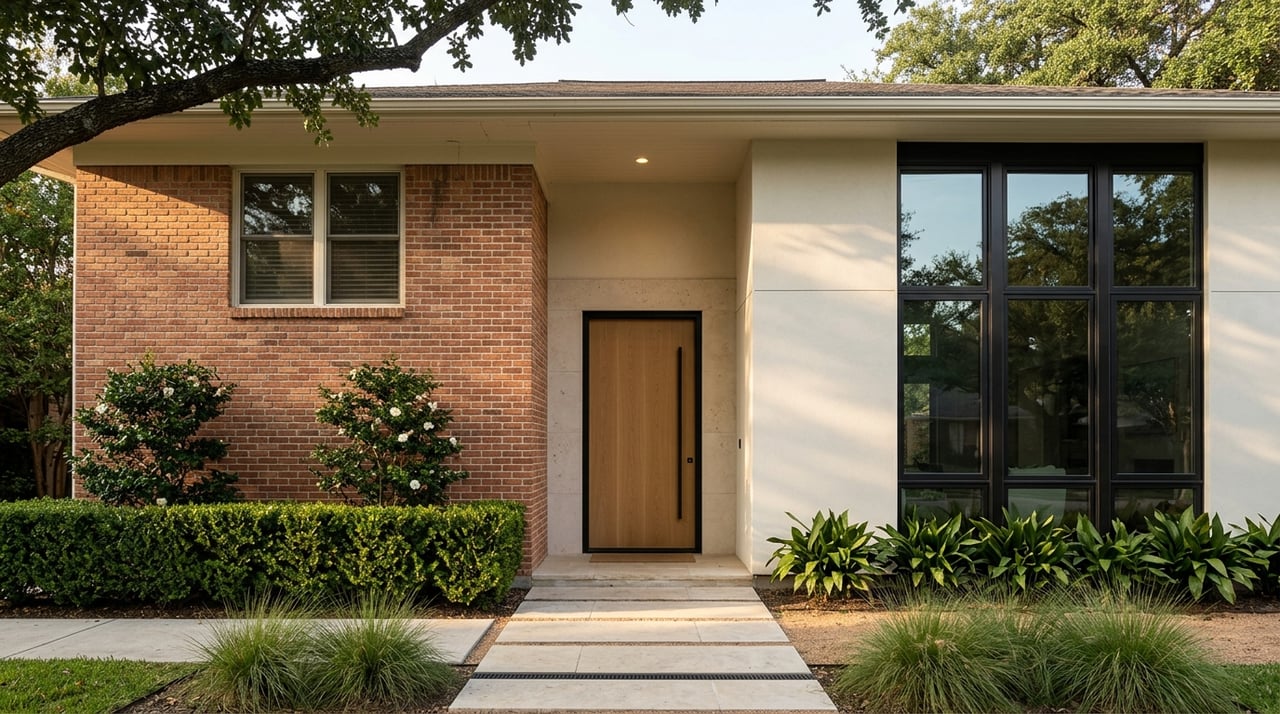
Classic homes in Memorial often appeal to buyers who want character, mature surroundings, and a more established feel. In older sections of the area, you will find homes shaped by postwar ranch and modern design, with details that are hard to duplicate in many newer builds.
Memorial Bend is one well-known example of older Memorial housing stock. It has 364 single-family homes and is known for a dense collection of 1950s modern houses, along with traditional homes. Architectural features can include low-pitched or flat roofs, butterfly roofs, clerestory windows, one-story massing, wide eaves, open floor plans, large windows, patios, and courtyard-style layouts.
Many classic Memorial homes were designed around a different way of living than today’s new construction. You may see more one-story layouts, original room arrangements, and architecture that feels tied to the lot rather than maximized for square footage.
For some buyers, that is the whole appeal. These homes can feel warmer, more distinct, and more connected to the neighborhood’s history. If you value design personality, older Memorial homes often stand out.
The Memorial super-neighborhood is described by the City of Houston as heavily wooded, and that shows up in many older residential pockets. Classic homes often sit on mature lots with established trees and a sense of landscape that newer developments rarely replicate.
In some areas, lot size rules are also a major part of the equation. Spring Valley cites a 10,000-square-foot minimum lot area for residential lots, while Bunker Hill subdivision guidance notes 20,000 square feet in District A and 10,000 square feet in District B. Those standards help explain why lot dimensions and site placement matter so much when you evaluate an older home.
Character can come with extra homework. Because many classic Memorial homes are older, you will want to look carefully at the age and condition of major systems and whether the current footprint still supports the way you live today.
If you are considering updates or additions, it is important to understand that future work may be shaped by setbacks, lot coverage, drainage requirements, tree rules, deed restrictions, or local review processes. In other words, a charming older home may offer flexibility, but not without document review and planning.
In Memorial, newer homes are often not part of brand-new subdivisions. Many are rebuilds or major replacements on established lots, which creates a very different buyer experience from what you might expect in a typical suburban new-construction community.
These homes are usually shaped by today’s permitting, drainage, tree, and site-planning requirements rather than by the looser assumptions of earlier decades. That often leads to a more engineered and compliance-driven result.
One of the biggest draws of a newer or recently rebuilt home is predictability. You are less likely to inherit decades-old layouts or systems, and the home may align more closely with current expectations for space planning and daily function.
That does not remove the need for due diligence, but it can reduce uncertainty around major components and how the property was designed. For many buyers, that smoother path is a real advantage.
In Memorial-area neighborhoods, newer homes are often built within a more structured review environment. For example, Memorial Bend’s architectural committee reviews proposed changes for compliance with deed restrictions and architectural guidelines, and its checklist for new construction includes demolition plans, surveys, tree surveys, tree plans, floor plans, roof plans, drainage plans, garage and site plans, and exterior elevations.
Spring Valley also requires permit review for new single-family homes, including planning and zoning sign-off, plot plans, tree disposition surveys, drainage plans, and exterior elevations. The city caps building height at 36 feet and says coverage behind the front setback cannot exceed 60 percent.
Bunker Hill’s subdivision materials also show how site-specific newer homes can be. Minimum final lot sizes differ by district, and below-ground detention is required for 100 percent of lot area for subdivision in a 100-year storm event. The city also updated drainage rules to require standard detention for lots under 25,000 square feet, calculated at 45 percent of the lot.
The practical takeaway is simple: newer homes in Memorial may feel more polished and current, but they are often the product of tighter design constraints. The final house is not just a design choice. It is also the result of current local rules tied to lot coverage, drainage, trees, setbacks, and approvals.
That can be a benefit if you prefer a home that already reflects today’s standards. It can also mean that if you hope to change the property later, you still need to understand what approvals and limitations apply.
If you are trying to decide between the two, it helps to frame the choice as character versus predictability. Neither is automatically better. The right answer depends on how you live, how much work you want to take on, and what you want the property to do for you over time.
Here is a simple side-by-side view:
| Factor | Classic Memorial Home | Newer or Rebuilt Memorial Home |
|---|---|---|
| Style | Often distinct, with postwar ranch or modern character | Often more current in layout and finishes |
| Lot feel | Frequently mature, wooded, and established | Often on established lots but redesigned under current rules |
| Layout | May reflect older one-story or original floor plans | Often planned around modern use patterns |
| Condition risk | May require closer review of systems and prior work | Often offers more predictability, but still needs review |
| Future changes | Can be limited by deed restrictions, setbacks, drainage, and trees | Also limited by current municipal and neighborhood standards |
| Buying mindset | Best for buyers comfortable with nuance and potential projects | Best for buyers who want a more move-in-ready path |
In Memorial, a smart purchase is rarely just about finishes or square footage. The documents behind the property can tell you whether the home fits your future plans and whether prior work was properly handled.
Houston states that deed restrictions are subdivision-specific and not uniform across the city. Memorial Bend and the Memorial Villages also have their own approval structures, which is why buyers should not assume the same rules apply from one section of Memorial to another.
Before you move forward on either an older home or a newer rebuild, ask for:
These records can help you understand what has already been done and what may or may not be possible later.
Whether you choose classic or newer, certain issues deserve close attention in Memorial. The local review environment makes physical condition and site compliance especially important.
Focus your due diligence on:
Houston’s site-plan review process checks lot size, setbacks, parking, landscaping, and access. Spring Valley notes that remodels can require plans showing electrical, plumbing, and mechanical changes, and Memorial Bend specifically requires tree and drainage plans for qualifying projects.
If you love architecture, mature lots, and the idea of making a property your own over time, a classic Memorial home may be the better fit. You may gain stronger design identity and an established setting, but you will want to be ready for more research and a deeper review of what the property allows.
If you want a more controlled, move-in-ready experience, a newer or rebuilt home may feel more comfortable. You may benefit from a home already shaped around current standards, but you still need to understand the site-specific rules that influenced the build.
The best choice usually comes down to your tolerance for uncertainty, your renovation appetite, and how important future flexibility is to you. In Memorial, the lot and the rules can be just as important as the floor plan.
If you are weighing classic charm against newer-home predictability in Memorial, working with an advisor who understands local nuance can save you time and help you avoid expensive surprises. To plan your next move with confidence, book a private real estate consultation with Mariana Saldaña.

Uptown Real Estate Group wants to give you the best experience choosing your new home. We are real estate agents ready to support your questions and give you the lowest prices according to your needs, feel free to ask whatever you want. It's a pleasure to serve you!